Whilst writing the 2025 retrospective, I realised that the falkus.co blog has been going for 10 years! Time for a whole blog retrospective!
- In The Beginning
- The First Visuals and Tech Stack
- Post Frequency
- Content Stages
- The Next 10 Years
- You Should Start A Blog
- Postscript: The Shadow Blog
In The Beginning
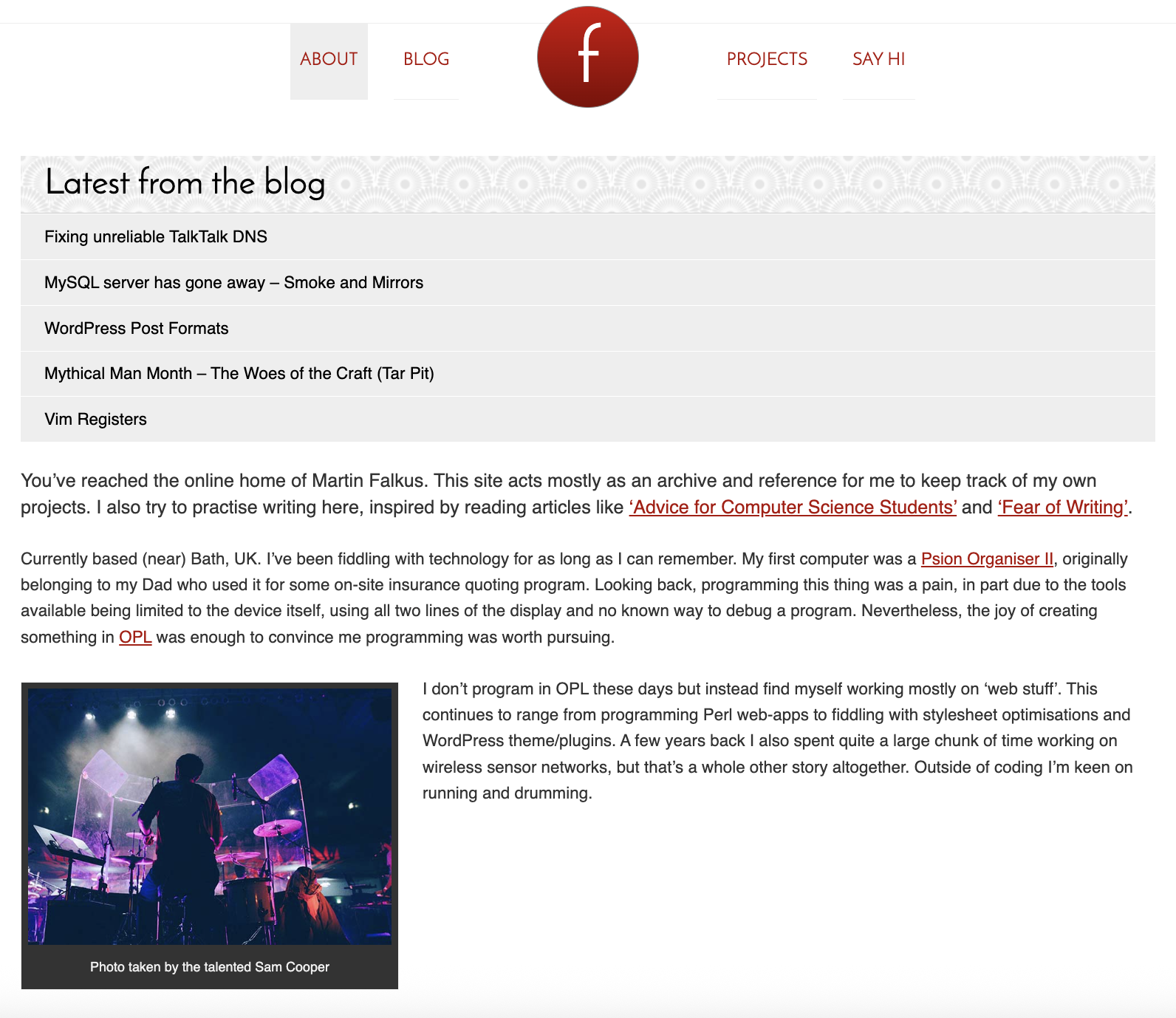
A different look back in 2015/2016
The falkus.co domain was registered back in 2011, but I didn’t start publishing a blog until 2015. To set the scene, at that time I had just graduated from Bath Uni after studying Computer Science, and was getting started on full-time work at Netcraft. I was also doing occasional web development projects, mostly WordPress theme and plugin builds, something I’d done through my sixth form and University years. A mix of projects for fun and profit.
I was following various bloggers from that time, mostly popular tech developers like Paul Graham, Joel Spolsky and Jeff Atwood. Their articles were well written and interesting. They all also encouraged others to blog themselves (sometimes directly, sometimes just via encouragement to keep learning and to write lots). The first version of the falkus.co blog site even linked directly to two example inspirational posts: Advice for Computer Science College Students by Joel Spolsky and Fear of Writing by Jeff Atwood.
The first of those has lots of great quotes. Pulling out just two examples:
The difference between a tolerable programmer and a great programmer […] is whether they can communicate their ideas
Very true.
Start a journal or weblog. The more you write, the easier it will be, and the easier it is to write, the more you’ll write, in a virtuous circle.
Also true. I find the momentum of having recently published a post very helpful in getting started on the next.
With that as the background, July 2015 was launch time. The site home page gave the aim: “This site acts as an archive of software development stories and web projects that I think others might find useful.”
I’d say that whilst I hope others might find the content useful, there is a strong pull to write the blog posts just for my own benefit. Writing makes you clarify your own understanding, so there’s value in the creation of the post, even if no one reads it. More on this later.
The First Visuals and Tech Stack
I couldn’t quickly find the old theme files, but Wayback Machine has a copy of the site from 2016 as shown above. I’d completely forgotten what it used to look like!
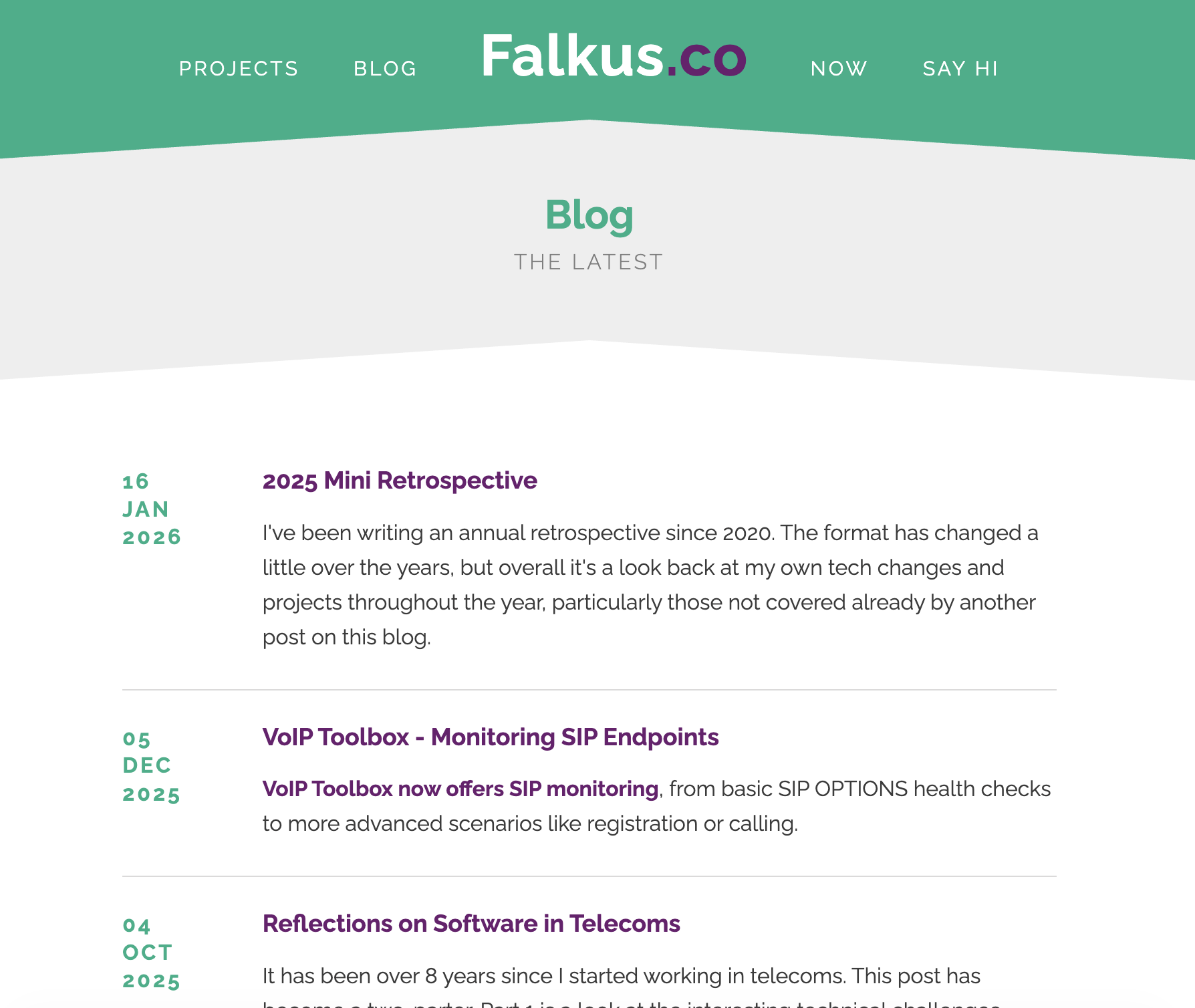
A screenshot of the blog in 2026, based on styling from Unfold Studio. Storing it in this post as a reference for my future self (a little meta I know).
That first look lasted just about a year. In late 2016 I was working on a project with Unfold Studio. As a favour, Huw at Unfold kindly made some blog theme assets which are mostly what you still see today.
The site was originally running on WordPress. The WP theme for the blog is still available on GitHub although it has not been actively maintained for probably 7 years, so your mileage may vary.
Post Frequency
Not to keep quoting Jeff’s blog, but his schedule was 6 posts a week back in 2007. I started the falkus.co blog with a considerably less ambitious (but realistic!) aim of a single post each month. It is not particularly difficult maths to see I haven’t managed that! I should have 120 posts, but instead had 88 at the close of 2025. I’m pretty pleased with that though, and the fact the blog is still going after a decade is encouraging.
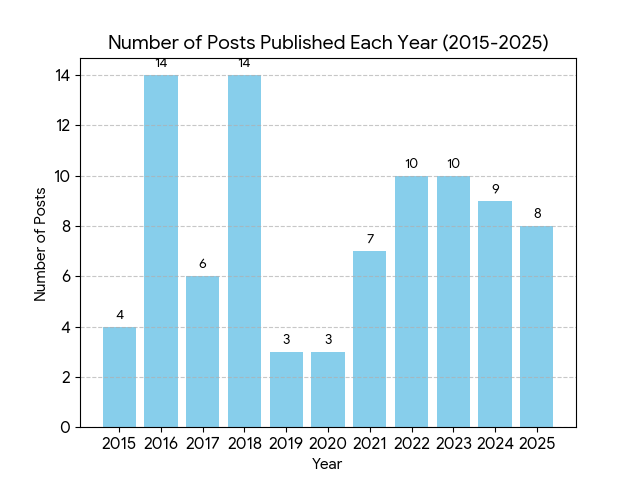
How many posts?
I follow Michael Lynch’s popular blog, an ex-Googler turned Indie Developer. He recently posted his annual review of being an indie dev:
It turns out that even when all I have to do is write, I can still only write for about an hour per day. After that, I feel drained, and my writing degrades rapidly.
My experience has certainly been similar. I’ve occasionally tried to put aside an entire morning or afternoon to write a post, but that’s often not conducive to good work. It’s much easier in times of inspiration to get in the ‘flow’.
With that in mind, if I tried to write more consistently in the coming years a good approach would be to aim to publish as soon as the initial draft is written, whilst the inspiration is still relatively fresh.
Content Stages
The blog has always tried to have a loose tech focus. It doesn’t really cover elements of my personal life, the closest cross-over being the odd mention of a piece of home networking gear.
Looking back at the 88 posts, the theme has shifted a little. Here’s my take:
Phase 1: Web & WordPress Craft (2015 – 2017). A reflection on all the web development I was doing at the time. Lots of CSS and WordPress.
Phase 2: DevOps & Infrastructure Shift (2018 – 2020). Less web dev and UI, a lot more infra. Helpful scaffolding around running VMs etc.
Phase 3: VoIP & Custom Tools (2021 – 2023). Posts are getting a little niche. Lots around tooling and posts on VoIP/SIP.
Phase 4: More Tooling & Project Reflection (2024 – 2025). More posts on creating tooling, and general reflection on some of the bigger projects I’ve worked on - more of the ‘why’, less of the ‘how’.
The Next 10 Years
Jeff Atwood did his own 10 Years of Coding Horror post back in 2014. In it he mentions an offer he received from someone to buy his blog for $120k. No one has offered to buy this blog yet, let alone for $120k (I’ll let you know if that changes). But I digress, the point of mentioning that post is that he talks about how beneficial writing a blog has been to him. I have found the same. This blog has been helpful and overall enjoyable to write - I should keep going!
My historic aim to post once a month (if I have something interesting to talk about) is the approximate frequency I plan to continue with going forward. The bar for ‘interesting to talk about’ has become higher in the last couple of years mind. Now that AI can give a decent summary and explanation for a technical problem or question, I find I’m less inclined to write a tutorial/guide style post and perhaps more inclined to write opinions/reflections. I wonder if that’s a common feeling for tech bloggers?
You Should Start A Blog
I was pleased that my friend Matt recently started blogging (alongside writing an online PlayStation 3 magazine). It reminded me that when I started back in 2015 a lot of my peers from work or University were also blogging.
Blogging not only clarifies your own thinking, but you can let your friends and colleagues know what you’re up to in a much higher bandwidth way than a status update or tweet. Blogs by friends are especially enjoyable. jes is a prolific blogger of interesting subjects (started in 2013, over three hundred posts so far!). Feroz has even taken to mailing out physical blog-style newsletters, which are a fun and witty read. It’s nice getting things in the post that aren’t bills or junk mail.
Text is King is a great post about how good text/writing is compared to other forms when it comes to sharing ideas. With an ever-increasing amount of AI ‘slop’ being generated, and an endless amount of video shorts to watch, well crafted and researched writing is still a breath of fresh air for thinking about and sharing ideas.
Postscript: The Shadow Blog
Should every thought and idea be published? I recently read Weaving the Web, a memoir by Sir Tim Berners-Lee around how the Web started. In the book, he talks about how the Web was supposed to inter-link all data, that is both public and private (the latter eventually getting the ‘intranet’ term). This got me thinking that I might find a private blog useful.
At the time of
writing I have 12 drafts on the go. Some of those need more effort to be
coherent enough to publish, but are already sort of useful enough for
my own records. Content in that _drafts folder tends to move eventually,
either to publish, or to the bin. I wonder if it should always be publish,
either to the public web or my own archive.
Alongside those draft posts are many folders, local and online, of other
notes that could do with a better place to live.
Perhaps I’m heading in the direction of products like Notion, except I don’t want to pay a monthly fee and am happy to self-host. Obsidian sounds interesting, I very much like that it can work with markdown files in a git repo. I need to have a play and see what extras the UI gives.
Writing a post, rather than just making a note, feels like the key difference, even if the content stays private. ‘Publish’ encourages more complete thoughts by setting up a psychological finish line. I’m keen to explore that in the next 10 years of blogging.
Bonus Content
This didn’t really fit anywhere in the main post, but I thought it was a fun point in time piece of trivia. Joel’s Advice for Computer Science College Students post says:
[...] So you’d be better off ignoring what I’m saying here and instead building some kind of online software thing that lets other students find people to go out on dates with.
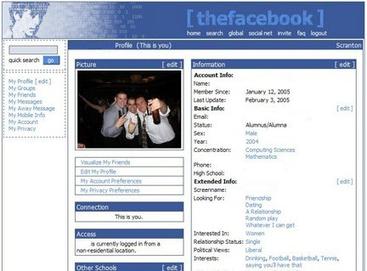
'thefacebook' from 2005
Where 'online software thing' links to thefacebook.com, which is a great piece of history. That post was from Jan 2005, Facebook dropped 'The' from its name that same year.